Want to grow your business fast? Mastering leads online is the ultimate game-changer. In today’s digital world, generating high-quality leads isn’t just helpful—it’s essential for survival and growth. Let’s dive into the strategies that actually work.

Understanding Leads Online: What They Are and Why They Matter

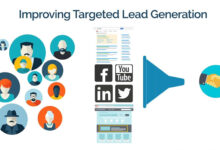
Before diving into tactics, it’s crucial to understand what leads online really mean in the context of digital marketing and business growth. A lead is any individual or organization that has shown interest in your product or service. This interest can come from filling out a form, subscribing to a newsletter, downloading a resource, or engaging with your content.
Defining a Lead in the Digital Age
In the past, leads were often generated through cold calls or in-person meetings. Today, leads online are primarily captured through digital channels such as websites, social media, search engines, and email campaigns. The shift to digital has made lead generation faster, more scalable, and more measurable.
- A lead is not a sale—yet. It’s the first step in the customer journey.
- Leads online are typically categorized by how they were acquired (organic, paid, referral, etc.).
- They can be anonymous (e.g., website visitors) or identified (e.g., email subscribers).
Why Online Leads Are the Lifeblood of Modern Business
Without a steady stream of leads online, even the best products can fail. Why? Because visibility and interest must precede sales. According to HubSpot, companies that prioritize lead generation grow 2.5x faster than those that don’t (HubSpot Research).
- Leads fuel your sales pipeline.
- They provide data for refining marketing strategies.
- They enable personalized customer engagement.
“A business without leads is like a car without fuel—it might look great, but it’s going nowhere.”
7 Proven Strategies to Generate High-Quality Leads Online
Not all leads are created equal. The goal isn’t just to generate volume, but to attract the right people—those who are genuinely interested and likely to convert. Here are seven battle-tested strategies to generate high-converting leads online.
1. Optimize Your Website for Lead Capture
Your website is your digital storefront. If it’s not designed to convert visitors into leads online, you’re leaving money on the table. Start by ensuring your site has clear calls-to-action (CTAs), fast loading times, mobile responsiveness, and intuitive navigation.
- Use pop-ups or slide-ins strategically to offer value in exchange for contact info.
- Place lead capture forms above the fold on key pages.
- Implement live chat tools like Intercom to engage visitors in real time.
2. Create High-Value Lead Magnets
A lead magnet is a free resource offered in exchange for a visitor’s contact information. The more valuable and relevant it is, the higher the conversion rate. Examples include eBooks, checklists, templates, webinars, and free trials.
- Solve a specific problem your audience faces.
- Keep it concise and actionable.
- Use professional design to increase perceived value.
“The best lead magnets don’t sell—they serve.”
3. Leverage SEO to Attract Organic Leads Online
Search Engine Optimization (SEO) is one of the most cost-effective ways to generate sustainable leads online. By ranking for keywords your audience is searching for, you attract visitors who are already interested in your niche.
- Conduct keyword research using tools like Ahrefs or Moz.
- Create long-form, informative content that answers user intent.
- Optimize meta titles, descriptions, headers, and image alt text.
4. Run Targeted Paid Advertising Campaigns
While SEO takes time, paid ads can deliver immediate results. Platforms like Google Ads, Facebook, LinkedIn, and Instagram allow you to target specific demographics, interests, and behaviors to generate leads online quickly.
- Use A/B testing to refine ad copy and visuals.
- Retarget website visitors who didn’t convert.
- Set up conversion tracking to measure ROI accurately.
5. Build an Email List with Strategic Nurturing
Email remains one of the highest ROI channels for converting leads online. But it’s not just about collecting emails—it’s about nurturing them with relevant, valuable content over time.
- Use a reliable email service provider like Mailchimp or ConvertKit.
- Segment your list based on behavior or demographics.
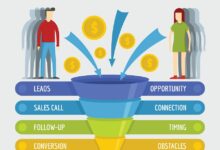
- Send automated drip campaigns to guide leads through the funnel.
6. Harness the Power of Social Media Engagement
Social media isn’t just for brand awareness—it’s a powerful tool for generating leads online. Platforms like LinkedIn, Facebook Groups, and Instagram can be used to build trust and drive traffic to lead capture pages.
- Share educational content that positions you as an expert.
- Engage in conversations and answer questions in your niche.
- Use lead generation forms directly on Facebook and LinkedIn.
7. Partner with Influencers and Industry Experts
Collaborating with influencers or thought leaders can expose your brand to a highly engaged audience. When done right, these partnerships can generate a flood of qualified leads online.
- Choose partners whose audience aligns with your ideal customer.
- Offer joint webinars, co-branded content, or affiliate programs.
- Track performance using unique referral links or promo codes.
The Role of Landing Pages in Converting Leads Online
A landing page is a standalone web page designed for one purpose: to convert visitors into leads online. Unlike regular website pages, landing pages remove distractions and focus entirely on a single call-to-action.
Key Elements of a High-Converting Landing Page
To maximize conversions, your landing page must be laser-focused on persuasion. Every element should guide the visitor toward submitting their information.
- Clear, benefit-driven headline (e.g., “Get Your Free SEO Audit in 60 Seconds”).
- Compelling subheadline that expands on the offer.
- Concise form with minimal fields (name and email often suffice).
- Social proof (testimonials, logos of clients, or trust badges).
- Strong CTA button with action-oriented text (e.g., “Download Now” or “Start Free Trial”).
Best Practices for A/B Testing Landing Pages
Even small changes can have a big impact on conversion rates. A/B testing allows you to compare two versions of a landing page to see which performs better.
- Test one variable at a time (e.g., headline, CTA color, form length).
- Use tools like Optimizely or Google Optimize.
- Run tests until you achieve statistical significance (usually 95% confidence).
“Don’t guess what works. Test it.” — Rand Fishkin, Founder of Moz
Using CRM Tools to Manage and Nurture Leads Online
Generating leads online is only half the battle. The real challenge lies in managing, tracking, and nurturing those leads until they’re ready to buy. This is where Customer Relationship Management (CRM) systems come in.
Top CRM Platforms for Lead Management
A good CRM helps you organize lead data, automate follow-ups, and track interactions across multiple touchpoints.
- Salesforce: Industry leader with robust features for large teams.
- Zoho CRM: Affordable and user-friendly for small to mid-sized businesses.
- HubSpot CRM: Free tier available with excellent integration capabilities.
Automating Lead Nurturing Workflows
Manual follow-ups are time-consuming and inconsistent. Automation ensures every lead receives timely, relevant communication.
- Set up email sequences based on lead behavior (e.g., downloaded a guide, visited pricing page).
- Use scoring systems to identify hot leads.
- Integrate with marketing tools for seamless data flow.
Measuring the Success of Your Leads Online Campaigns
You can’t improve what you don’t measure. Tracking key performance indicators (KPIs) is essential for optimizing your lead generation efforts.
Essential Metrics to Track
To understand how well your strategies are working, focus on these core metrics:
- Conversion Rate: Percentage of visitors who become leads.
- Cost Per Lead (CPL): How much you spend to acquire each lead.
- Lead Quality: How many leads actually convert to customers.
- Lead-to-Customer Ratio: Measures sales team effectiveness.
- Customer Acquisition Cost (CAC): Total cost to acquire a paying customer.
Tools for Analytics and Reporting
Leverage analytics platforms to gain insights and make data-driven decisions.
- Google Analytics: Track traffic sources, user behavior, and conversion paths.
- Google Data Studio: Create custom dashboards for reporting.
- CRM reporting features: Monitor lead lifecycle and sales pipeline health.
“What gets measured gets managed.” — Peter Drucker
Common Mistakes That Kill Leads Online Efforts
Even with the best strategies, businesses often sabotage their own lead generation. Avoid these common pitfalls to protect your ROI.
1. Targeting the Wrong Audience
If your message isn’t reaching the right people, no amount of optimization will help. Define your ideal customer profile (ICP) before launching any campaign.
- Use buyer personas to guide targeting.
- Analyze existing customer data to identify patterns.
- Refine audience segments over time.
2. Offering Low-Value Lead Magnets
If your freebie doesn’t solve a real problem, people won’t trade their email for it. Invest time in creating truly valuable resources.
- Survey your audience to learn their pain points.
- Update old lead magnets regularly.
- Offer tiered incentives (e.g., basic vs. premium download).
3. Neglecting Follow-Up and Nurturing
Most leads don’t convert on the first touch. According to MarketingSherpa, 80% of leads require 5+ follow-ups to close.
- Set up automated email sequences.
- Use phone calls or LinkedIn messages for high-value leads.
- Personalize communication based on lead behavior.
Future Trends Shaping Leads Online Generation
The digital landscape is constantly evolving. Staying ahead of trends ensures your lead generation strategies remain effective and competitive.
1. AI-Powered Lead Scoring and Chatbots
Artificial Intelligence is revolutionizing how businesses identify and engage with leads online. AI can analyze behavior, predict conversion likelihood, and even initiate conversations.
- Use chatbots to qualify leads 24/7.
- Implement predictive lead scoring to prioritize outreach.
- Leverage natural language processing (NLP) for personalized messaging.
2. Voice Search and Visual Search Optimization
With the rise of smart speakers and image-based search, optimizing for voice and visual queries is becoming critical for capturing leads online.
- Use conversational keywords for voice search (e.g., “Where can I buy…”).
- Optimize product images with descriptive alt text and structured data.
- Ensure your site is mobile-friendly and fast-loading.
3. Privacy-First Marketing in a Cookieless World
With third-party cookies being phased out by browsers like Chrome, marketers must adapt to a privacy-first environment.
- Focus on first-party data collection (e.g., email signups, surveys).
- Build trust through transparent data policies.
- Invest in contextual advertising over behavioral tracking.
“The future of leads online isn’t about tracking people—it’s about earning their attention.”
How do you define a qualified lead?
A qualified lead is someone who not only shows interest but also fits your ideal customer profile and has the authority, budget, and need to make a purchase. They’ve typically engaged with your content, visited key pages (like pricing), and may have responded to nurturing efforts.
What’s the difference between marketing-qualified and sales-qualified leads?
Marketing-Qualified Leads (MQLs) are leads identified by marketing as potentially interested based on engagement (e.g., downloaded a guide). Sales-Qualified Leads (SQLs) are MQLs that the sales team has vetted and deemed ready for direct outreach.
How long does it take to see results from leads online strategies?
It depends on the strategy. Paid ads can generate leads online within days, while SEO and content marketing may take 3–6 months to gain traction. Consistency and optimization are key to long-term success.
Can small businesses compete in generating leads online?
Absolutely. Small businesses often have an advantage in agility, personalization, and niche targeting. By focusing on high-value content, local SEO, and community engagement, they can generate leads online effectively—even with limited budgets.
What’s the biggest mistake businesses make with online leads?
The biggest mistake is treating lead generation as a one-time campaign rather than an ongoing process. Sustainable success comes from consistent content creation, audience engagement, and data-driven optimization.
Generating leads online is no longer optional—it’s the foundation of modern business growth. From optimizing your website and creating irresistible lead magnets to leveraging AI and adapting to privacy changes, the strategies outlined here provide a comprehensive roadmap. The key is to start, measure, refine, and scale. Whether you’re a startup or an established brand, mastering leads online will give you the competitive edge you need to thrive in the digital economy.
Further Reading:
